
Loading...
Serving Essex, VT and surrounding areas. (802) 876-8645
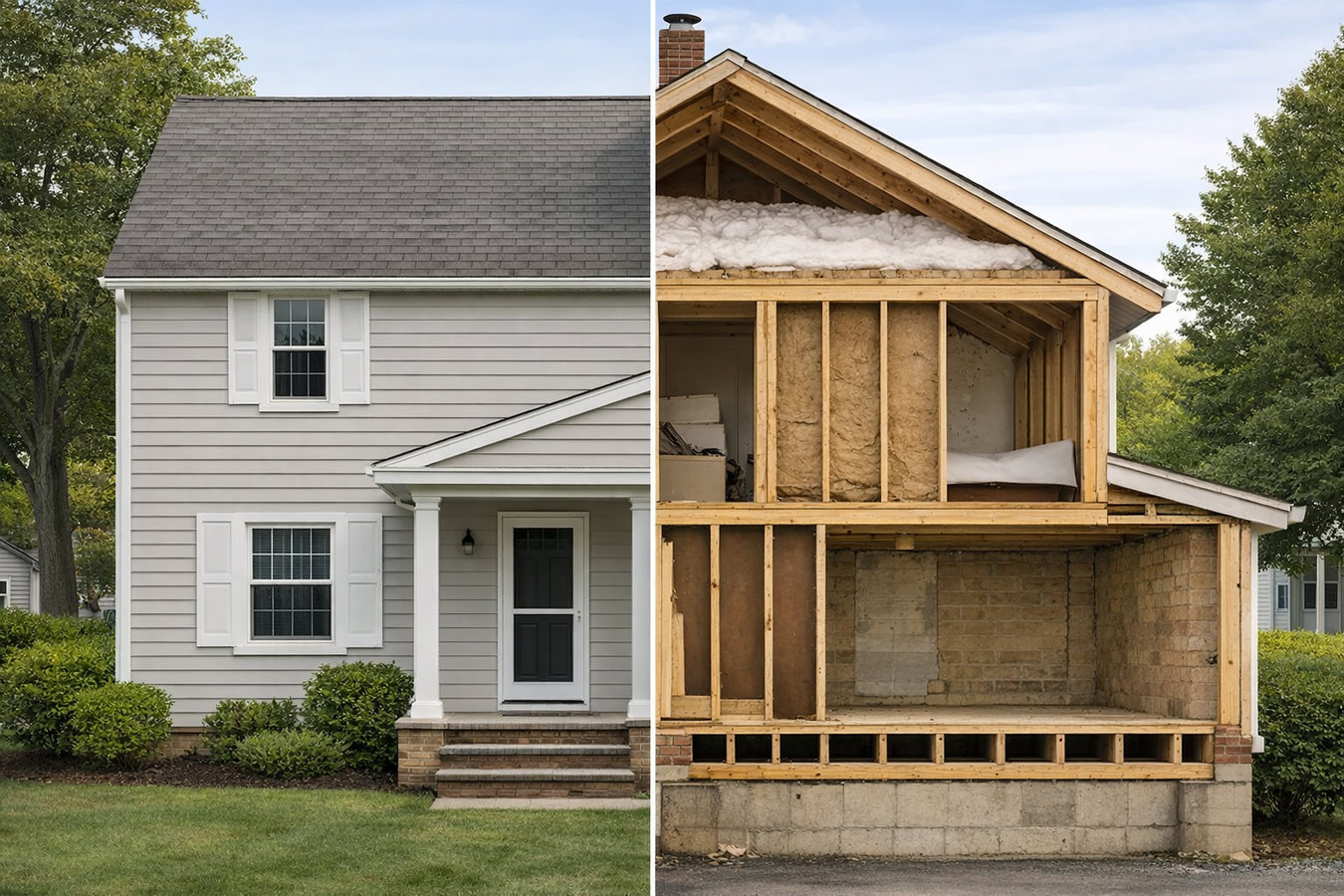
Essex Insulation provides home insulation, attic insulation, and spray foam services to homeowners throughout Shelburne, VT. We have served Chittenden County since 2015 and work regularly in Shelburne - from the historic farmhouses near Shelburne Village to the larger properties along Lake Champlain. Free estimates, responses within one business day.
Shelburne has a wide mix of home ages - from 19th-century farmhouses near the village center to mid-century colonials to newer builds on the town's edges - and each type has different insulation needs. A whole-home approach looks at the attic, walls, basement, and crawl space together, because addressing only one area often shifts the problem rather than solving it. Learn more about our home insulation services and how we approach projects on older New England properties specifically.
Shelburne gets 70 or more inches of snow most winters, and older homes here - many with original wood clapboard siding and steep rooflines - are consistently at risk for ice dams when attic insulation is thin. Heat escaping upward warms the roof and melts snow at the ridge, the water runs to the cold eaves and refreezes, and the backed-up ice forces water under the shingles. Bringing attic insulation to the right depth stops that chain before it starts.
Shelburne farmhouses and older colonials often have basement rim joists that were never insulated - or were insulated with fiberglass batts that have since shifted or degraded. Closed-cell spray foam addresses both the insulation gap and the air seal at the rim joist in a single application, which matters especially for properties near Lake Champlain where ground moisture can make its way into basements during spring snowmelt.
Shelburne properties - especially the older farmhouses and rural homes on larger lots - sometimes have crawl spaces or partial basements with bare earth floors. Vermont clay soils hold water longer than sandy soils, so spring snowmelt can keep the ground around foundations saturated into May. A properly installed vapor barrier stops ground moisture from migrating up through the crawl space floor and damaging the wood structure and insulation above.
Blown-in insulation is particularly well-suited to Shelburne's older housing stock because it fills every corner and gap around existing wiring, framing, and blocking without requiring walls or attic floors to be opened up. For homes built before 1980 with irregular framing and decades of modifications, blown-in material conforms to the actual shape of the space rather than the shape it was supposed to be.
Vermont frost depth requires deep foundations, so full basements are standard even in Shelburne's older farmhouses. Many of these basements are used as mechanical rooms or storage and lose significant heat through uninsulated stone or poured-concrete walls. Insulating the basement reduces cold floors on the ground story and lowers the workload on heating oil and propane systems that Shelburne homeowners rely on heavily.
Shelburne is about 6 miles south of Burlington and is one of the wealthier towns in Vermont, with high home values and a housing stock that is overwhelmingly owner-occupied. Most of the housing is single-family, with lots that are larger than what you find in Burlington - many properties have an acre or more, long private driveways, and outbuildings like detached garages or barns. The older homes near Shelburne Village include 19th-century farmhouses with original wood framing, stone foundations, and wide-plank construction that predates modern energy codes by decades. Mid-century colonials from the 1950s through the 1980s make up the bulk of the housing stock closer to Route 7. Newer subdivisions from the 1990s and 2000s sit on the town's eastern and southern edges toward Williston and Charlotte. Each type has a different insulation profile, but nearly all of them share the same underlying issue: the Vermont winters here are long, heating oil and propane are expensive, and any gap in the thermal envelope costs real money every season.
The Lake Champlain shoreline on Shelburne's western side adds a specific concern that inland properties don't have. Waterfront homes and properties near the lake sit in an area where the water table is relatively shallow and spring snowmelt can saturate soils for an extended period. Vermont's clay-heavy Champlain Valley soils drain slowly - in wet years, the ground around foundations can stay waterlogged from April into June. That moisture migrates into crawl spaces and basements, and insulation that gets wet loses its thermal value. Addressing moisture and insulation together is the correct approach for these properties. The Efficiency Vermont rebate program is available to Shelburne homeowners and can reduce the cost of qualifying insulation upgrades.
Our crew works throughout Shelburne regularly, and we pull insulation permits through the Town of Shelburne as part of every qualifying project. The permit process here is consistent, and pulling permits protects homeowners by ensuring work is inspected against Vermont's Residential Building Energy Standards before sign-off.
Shelburne Road (Route 7) runs through the center of town and is the main artery most residents know. The Shelburne Museum - a 45-acre outdoor museum near the village center - is one of the most recognizable landmarks in the state, and many of our Shelburne customers live in the neighborhoods that surround it. Farther west, Shelburne Farms on the Lake Champlain shoreline is another well-known anchor, and properties in that area tend to be older, larger, and more exposed to the moisture conditions that the lake and the clay soils create. We regularly work on the farmhouses and older colonials in that western corridor and know what moisture-related insulation problems look like when they show up in a crawl space or basement here.
To the south, we also serve Hinesburg, VT, where the housing stock shifts toward more rural properties on larger lots with similar older-farmhouse insulation challenges. To the north, our crews work frequently in South Burlington, VT, the closest dense suburban area to Shelburne.
Reach us by phone or through the contact form. We respond within one business day to schedule your on-site visit. No preparation is needed on your end before we arrive.
We measure existing insulation depth, check for air leaks, and assess moisture conditions - critical for older Shelburne homes near the lake or with stone foundations. We explain what we find and provide a clear cost estimate before scheduling any work.
Most Shelburne attic insulation projects complete in one day. Larger whole-home projects may take two to three days. The crew handles air sealing before installing insulation. For blown-in work, you can stay home. Spray foam requires you to leave for 24 hours after application.
Before we leave, we walk you through the completed work and confirm insulation depths. We handle any inspections required by the Town of Shelburne to close out the permit. Questions after the job are welcome - reach us by phone.
Shelburne homeowners get free on-site assessments, full permit handling, and responses within one business day. Call or fill out the form to get started.
(802) 876-8645Shelburne is a town of about 8,000 people in Chittenden County, located roughly 6 miles south of Burlington along Route 7. It is one of the most affluent towns in Vermont, with median home values and household incomes well above state averages. The housing mix is distinctive: the village center and areas to the west hold the oldest properties - some dating to the 1800s - including farmhouses, historic estates, and traditional New England two-stories with wood clapboard siding and original framing. Mid-century single-family homes from the 1950s through the 1980s line the neighborhoods closer to Route 7. Newer subdivisions from the 1990s and 2000s occupy the town's eastern and southern edges. Nearly all of Shelburne's housing is owner-occupied, and residents tend to stay long-term and invest in their properties. For a full overview of the community, the Wikipedia article on Shelburne, Vermont covers the town's geography and history in detail.
The town's western edge along Lake Champlain includes some of the most distinctive properties in the area - lakefront estates, working farmland, and the National Historic Landmark at Shelburne Farms. The Shelburne Museum near the village center is one of the most recognized cultural landmarks in Vermont and serves as a reference point for most local residents. We serve homeowners throughout all parts of Shelburne, and we are equally familiar with the insulation challenges in the rural areas to the south near Charlotte and the denser neighborhoods along Shelburne Road. For homeowners in the more rural areas bordering Shelburne to the east, Hinesburg, VT is another area we cover regularly with comparable older-farmhouse housing stock.
Creates an airtight seal that maximizes energy efficiency in any space.
Learn MoreHigh-density foam offering superior R-value and moisture resistance.
Learn MoreProfessional insulation solutions for commercial and industrial buildings.
Learn MoreBlocks moisture intrusion to protect your foundation and air quality.
Learn MoreCall Essex Insulation or submit the contact form and we will respond within one business day.