Loading...
Serving Essex, VT and surrounding areas. (802) 876-8645
If your floors are cold and your heating bills stay high all winter, your basement is likely the source. We fix that - fast, clean, and built to last through Vermont winters.
If your floors are cold and your heating bills stay high all winter, your basement is likely the source. We fix that - fast, clean, and built to last through Vermont winters.
Basement insulation in Essex slows heat from escaping through your foundation walls and floor system, keeping more warmth in the living space above. Most jobs are completed in one to three days and the difference - warmer floors, lower bills, and pipes that stay protected - shows up the same winter.
An uninsulated or under-insulated basement is one of the most common reasons Essex homeowners overpay for heat every winter. Because heat always moves toward cold, and your basement is surrounded by cold ground and outdoor air, heat pours out of the floor above if nothing is stopping it. Pairing basement insulation with good crawl space insulation gives your whole lower envelope the protection it needs.
Homes built before the mid-1980s in Essex often have little to no basement insulation. Even if some was added at some point, it may have shifted, degraded, or simply never met today's standards for Vermont's climate.
Walking across your kitchen or living room in bare feet on a January morning is a quick test. If the floor feels noticeably cold, heat is escaping downward through an uninsulated or under-insulated basement below. This is one of the most common complaints from Essex homeowners with older homes, and it is one of the clearest signs the basement needs attention.
If your fuel or electric bills feel high compared to neighbors with similar homes, the basement is one of the first places to look. In Essex's climate, an uninsulated basement can account for a large share of heat loss - and that loss shows up on your bill every month from October through April. Better insulation means that money stays in your pocket.
Frozen pipes are a real risk in Essex when temperatures drop into the single digits. If your pipes froze last winter - or if you kept a space heater running in the basement all season just to protect them - that is a strong sign the space is not insulated well enough for Vermont's coldest months. Proper insulation protects plumbing without the constant worry.
Vermont's snowmelt season puts real pressure on older foundations in Essex. If you notice a damp smell, water stains on the walls, or condensation forming on surfaces after the thaw, that is a signal to get a professional assessment before any insulation work begins. Addressing moisture first is critical - insulating over a wet basement creates bigger problems.
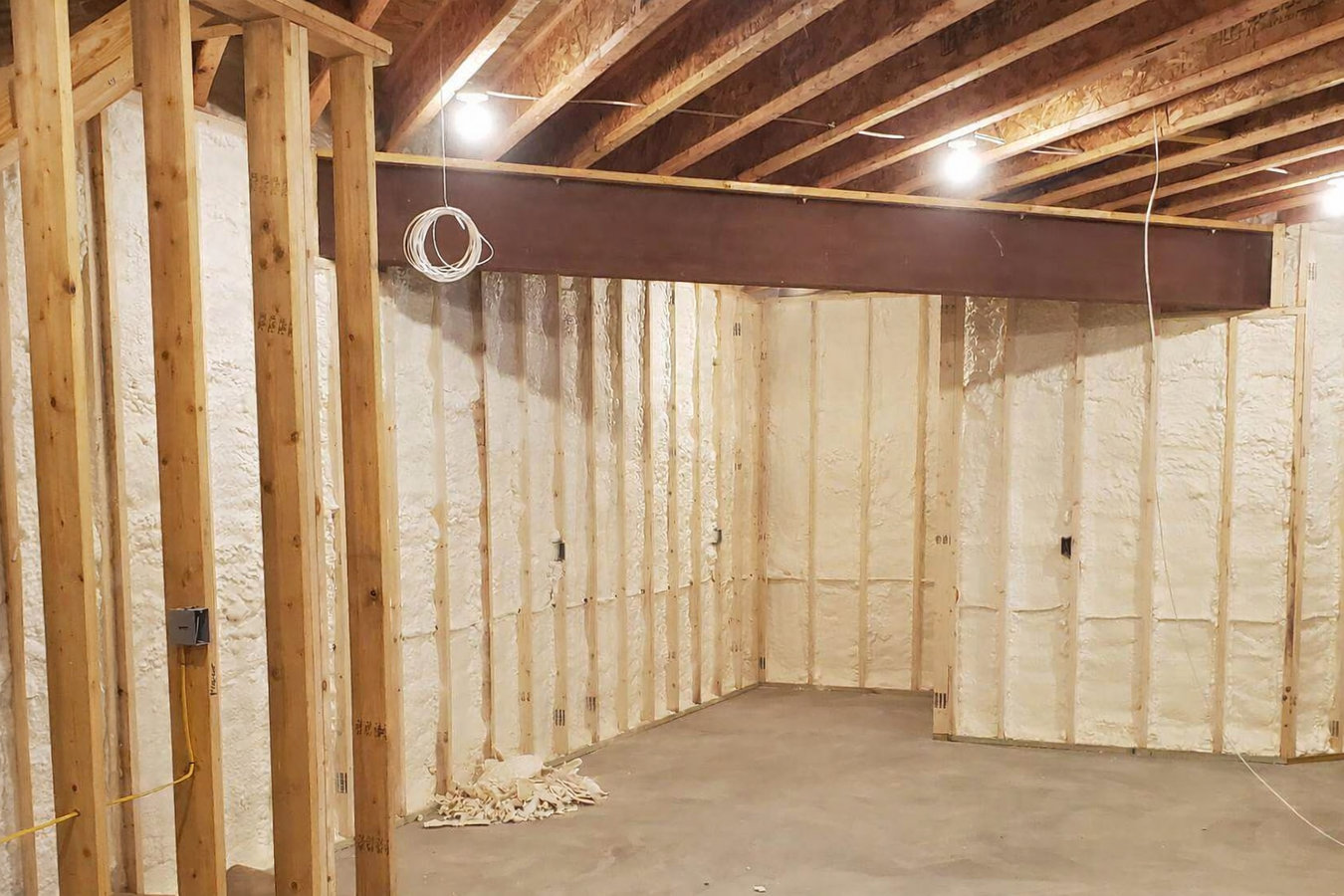
We insulate both basement walls and the ceiling above the basement - the right choice depends on how you use the space. For finished or semi-finished basements that you heat, insulating the walls brings the full lower level into your home's thermal envelope. For unfinished storage areas, insulating the ceiling above is simpler and often more cost-effective. We also handle the rim joist - the framing that sits right on top of your foundation wall - which is the single most common air leak in Vermont basements. Where moisture or structural concerns show up during assessment, we flag them before any work begins. Closed-cell foam insulation is our go-to material for rim joists and foundation walls because it seals and insulates in one pass.
Every basement insulation job starts with air sealing - closing gaps around pipes, wires, and the rim joist - before any insulation material goes in. A contractor who skips that step leaves cold air sneaking in even with new insulation on the walls. We also help you navigate Efficiency Vermont's rebate programs, which can meaningfully reduce what the project costs you out of pocket.
Best for finished or semi-finished basements you heat - brings the full lower level into your home's warm zone.
Best for unheated, unfinished basements used for storage - a simpler approach that keeps heat in the living space above.
Targets the most common air leak in Vermont basements - spray foam fills gaps and insulates in a single application.
For homes with significant draft problems - air sealing and insulation done together deliver the most noticeable comfort improvement.
Essex sits in Chittenden County, where average January lows regularly drop into the single digits and wind chill can push temperatures well below zero. That kind of sustained cold puts enormous pressure on any gap in a home's thermal envelope - and the basement is often the weakest link. Homeowners here aren't insulating for comfort alone. They're protecting pipes, cutting heating costs that can run very high through a Vermont winter, and keeping the whole house warmer from the ground up. Many of the homes in and around Essex were built between the 1960s and the 1990s, when insulation standards were much lower than they are today. If your home was built before 1985, there's a real chance the basement has never been properly addressed.
Vermont's wet springs add another layer of urgency. Snowmelt can push groundwater toward foundations, especially in homes on lower-lying lots or with older drainage systems. Any moisture problem needs to be resolved before insulation goes in - and a contractor familiar with Vermont conditions will check for signs of water intrusion as part of the initial walkthrough. We work throughout the area, including Williston and Colchester, where we see the same mix of older housing stock and cold-climate challenges as in Essex proper. Efficiency Vermont also offers real financial incentives for insulation upgrades - an experienced local contractor will know how to help you access those programs.
Call or submit a request online and we will get back to you within one business day to schedule a free walkthrough. No cost, no obligation - just a conversation about what your basement needs.
A contractor walks through your basement to check current insulation, look for air leaks around the rim joist, and flag any moisture concerns. This visit takes about 30 to 60 minutes and is where we determine which approach suits your home.
After the visit you get a written estimate with scope, materials, and total cost - broken out so you can compare it against other quotes. We also confirm whether your project qualifies for an Efficiency Vermont rebate, so you know the real out-of-pocket number before deciding.
Most basement insulation jobs are finished in one day. The crew starts with air sealing at the rim joist and any gaps, then applies insulation. When the work is done we walk you through what was completed, point out anything worth knowing, and leave the space clean and ready to use.
Free estimate, no pressure. We will walk through your basement, explain what we find, and give you a written quote - no obligation.
(802) 876-8645We seal gaps around pipes, wires, and the rim joist before any insulation material goes in. Skipping that step means cold air keeps entering even with new insulation on the walls - a common shortcut that leaves homeowners wondering why the work didn't help.
We know how to structure basement insulation work so it qualifies for Efficiency Vermont rebates. We help with the paperwork, so you get the incentive you are entitled to without having to navigate it yourself.
Vermont's wet springs mean moisture issues in basements are common. We check for signs of water intrusion during the initial walkthrough and will not proceed until any moisture concerns are addressed. Installing insulation over a damp basement creates problems far more expensive than the insulation itself.
Vermont follows the International Energy Conservation Code, and some basement projects require a building permit through the Town of Essex. We tell you upfront if a permit applies and handle the process - you do not have to track it down yourself.
Every job ends with a plain-language walkthrough so you can see exactly what was done and why it matters. We know Essex homes and Vermont winters - and that combination shows in the quality of the finished work.
The spray foam material we rely on for rim joists and foundation walls - high R-value, air-sealing, and moisture-resistant in one application.
Learn MoreProtect the other cold zone under your home - crawl space insulation works alongside basement work to seal your entire lower envelope.
Learn MoreHeating season fills our schedule fast. Call today to lock in your free estimate before the cold sets in and protect your home this winter.