Loading...
Serving Essex, VT and surrounding areas. (802) 876-8645
Older Essex commercial buildings lose heat through the roof, walls, and rim joists all winter long. Proper insulation stops that, cuts your energy costs, and makes every part of your building comfortable for employees and customers.
Commercial insulation in Essex, VT slows heat loss through your building's walls, roof, and floors, using spray foam, rigid board, or blown-in material depending on where the work is needed. Most jobs are completed in one to three days with minimal disruption to your business.
Essex and Essex Junction have a significant share of commercial buildings constructed before modern energy codes were in place - offices, retail spaces, light industrial buildings, and multi-unit properties that were never insulated to today's standards. In Vermont's climate, that gap between what was built and what is actually needed translates directly into higher energy costs and uncomfortable spaces. Pairing insulation with spray foam insulation in hard-to-reach cavities is often the most efficient approach for older buildings with complex framing.
Efficiency Vermont offers rebates specifically for commercial insulation upgrades, and some projects also qualify for federal tax incentives. We can help you understand what your building qualifies for before you commit - the savings are sometimes significant enough to change which scope makes the most financial sense.
If your heating and cooling bills have crept up year over year - or if they are noticeably higher than neighboring businesses in similar buildings - poor insulation is one of the most common causes. Vermont's long heating season means even a modest improvement in your building's envelope can show up clearly on your monthly statements.
Cold areas near exterior walls, ceilings, or corners are a classic sign that insulation is missing, thin, or has settled over time. In Essex, where January temperatures regularly drop below zero, a building that cannot hold heat evenly is working far harder than it should, and your employees will notice.
Drafts near windows, doors, or electrical outlets on exterior walls usually mean air is moving through gaps in the building envelope - often in the same areas where insulation is missing or has been disturbed. This is especially common in older Essex commercial buildings where insulation was never installed around pipes, wires, or structural connections.
When a building is poorly insulated, the heating and cooling equipment has to work overtime to compensate. If your system seems to run nonstop, or if it cycles on and off very frequently, the building envelope may be the real problem - not the equipment itself. Upgrading the insulation often resolves this without any equipment changes.
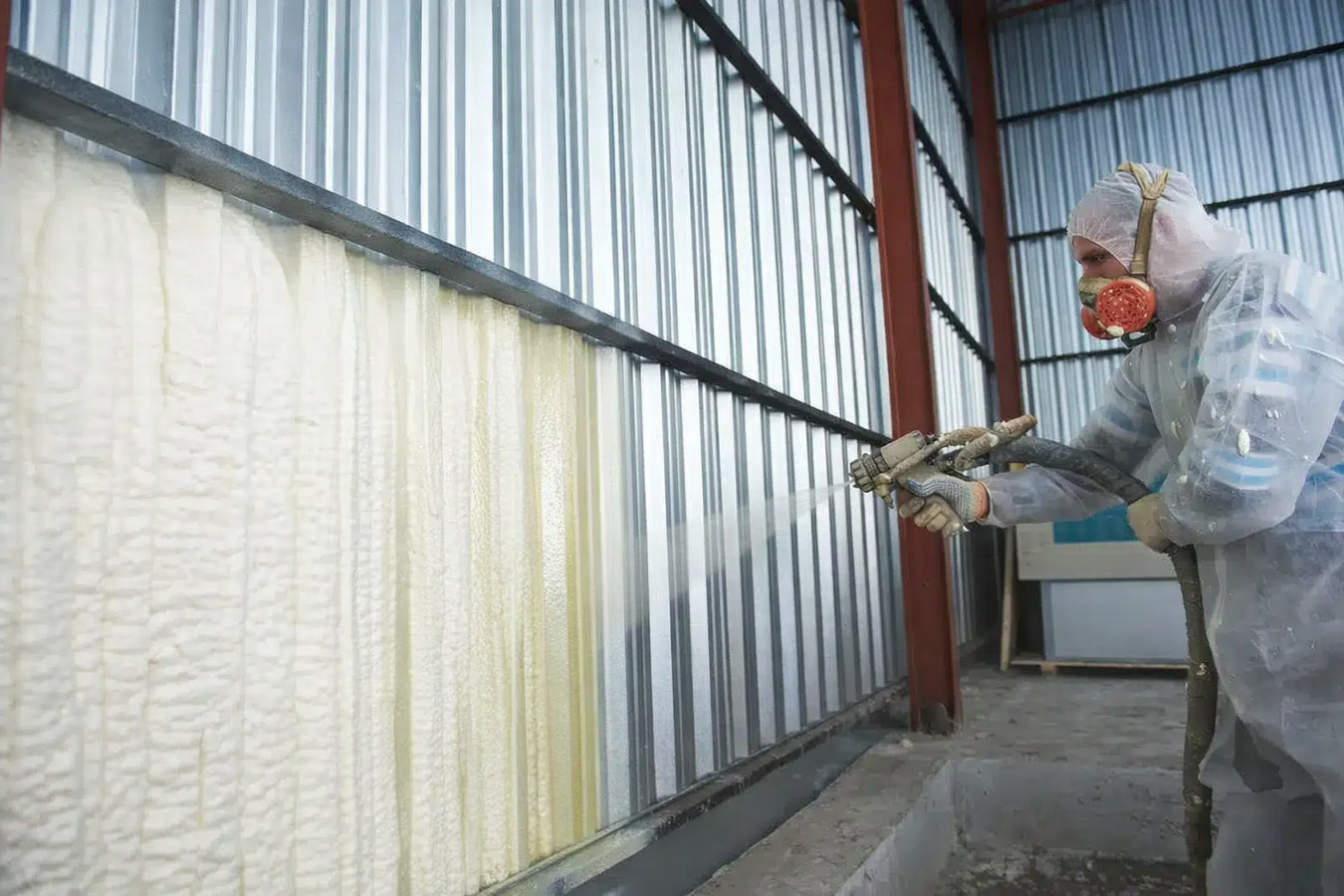
We work with three primary insulation types depending on your building's needs and the areas being addressed. Spray foam is the go-to choice for older buildings with irregular framing and multiple penetrations - it air-seals and insulates at the same time, which is why it produces such a dramatic difference in buildings that were never properly sealed. Rigid foam board works well on flat roof assemblies and clean exterior walls. Blown-in material covers large attic spaces quickly and cost-effectively.
For buildings with moisture concerns in crawl spaces or below-grade areas, we also offer crawl space vapor barrier installation as part of the same project scope - because addressing moisture before installing insulation is the only way to ensure the insulation performs correctly long-term. Every scope includes an air sealing assessment, because insulation without air sealing leaves a significant share of the heat loss problem unaddressed.
Best for older commercial buildings with irregular framing, hard-to-reach cavities, or spaces where air sealing and insulation need to happen in a single step.
Well-suited to flat roof assemblies, exterior wall retrofits, and areas with clean, regular surfaces where cut-and-fit installation is practical.
A cost-effective choice for large attic spaces in commercial buildings where coverage depth and speed of installation matter most.
Appropriate for any commercial building where insulation alone will not fully address drafts, moisture, or energy loss - most older buildings benefit from both.
Vermont sets higher minimum insulation requirements than most of the country because the climate demands it. Essex sits in a climate zone where average winter lows go well below zero and the heating season runs from October through April. A contractor calibrated to warmer states may not know what buildings here actually need - which is one reason why working with a contractor who operates regularly in Essex and Chittenden County matters. Business owners in St. Albans and throughout northwestern Vermont face the same conditions and the same risk of under-spec work.
Essex and Essex Junction also have a significant stock of older commercial buildings - offices, shops, and light industrial spaces constructed before modern energy codes were standard. These buildings frequently have little or no insulation in key areas, which means there is usually more room for improvement than owners expect, and the payback on upgrades tends to be faster because you are starting from a lower baseline. Efficiency Vermont's commercial rebate programs are available to reduce your upfront cost, and business owners in Burlington and the surrounding area are actively using them to fund upgrades that would otherwise wait another year.
When you reach out, we will ask a few basic questions about your building size, type of business, and what is prompting you to call. We reply within one business day and can typically schedule an on-site visit within one to two weeks.
We walk through your building and look at the areas most likely to be losing heat - the attic, exterior walls, basement rim joists, and mechanical spaces. Some assessments include a thermal imaging scan to spot hidden cold spots. You receive a written estimate that breaks down materials, labor, and scope.
For most commercial insulation work in Vermont, we handle the permit application - you should not have to navigate that process yourself. Once permits are in hand, most Essex projects can be scheduled within two to four weeks of your signed estimate.
Most commercial jobs are completed in one to three days. Before we leave, we walk you through the finished work and provide documentation for Efficiency Vermont rebates and any applicable federal tax incentives. If anything does not look right, say so before we pack up.
No obligation, no sales pressure. We will tell you exactly what your building needs and what it will cost. We reply within one business day.
(802) 876-8645Vermont sets higher minimum insulation requirements than most of the country, and a contractor calibrated to warmer climates may not know what buildings here actually need. We work throughout Essex and Chittenden County and understand the local standards and conditions that shape every project.
Efficiency Vermont offers rebates specifically for commercial insulation upgrades, and some projects may also qualify for federal tax incentives. We are familiar with those programs and can help you understand what your project qualifies for before you commit - so you do not leave money on the table.
We pull permits for the work that requires them. Permitted, documented insulation protects you at resale, during insurance claims, and when a building inspector comes through. Skipping permits is a shortcut that causes real problems later, and we will not suggest it.
Insulation slows heat movement, but air sealing stops the drafts that let cold air in around pipes, wires, and joints. We treat both as part of the same job - because doing one without the other leaves meaningful heat loss unaddressed, and older Essex buildings almost always need both.
Commercial insulation in Vermont often requires permits reviewed by the Vermont Division of Fire Safety. We handle that process so you do not have to, and the permitted record protects your investment at resale and during inspections. That combination - local knowledge, rebate access, permitted work, and air sealing included - is what separates a project that delivers real results from one that just checks a box.
Many commercial buildings in Essex have crawl spaces that need moisture control alongside insulation - learn how vapor barriers protect the structure.
Learn MoreSpray foam is the most common choice for older commercial buildings with complex framing and hard-to-reach cavities.
Learn MoreSchedule your free commercial insulation estimate now - late spring and early fall slots fill fast, and upgrading before winter is always worth it.