
Loading...
Serving Essex, VT and surrounding areas. (802) 876-8645
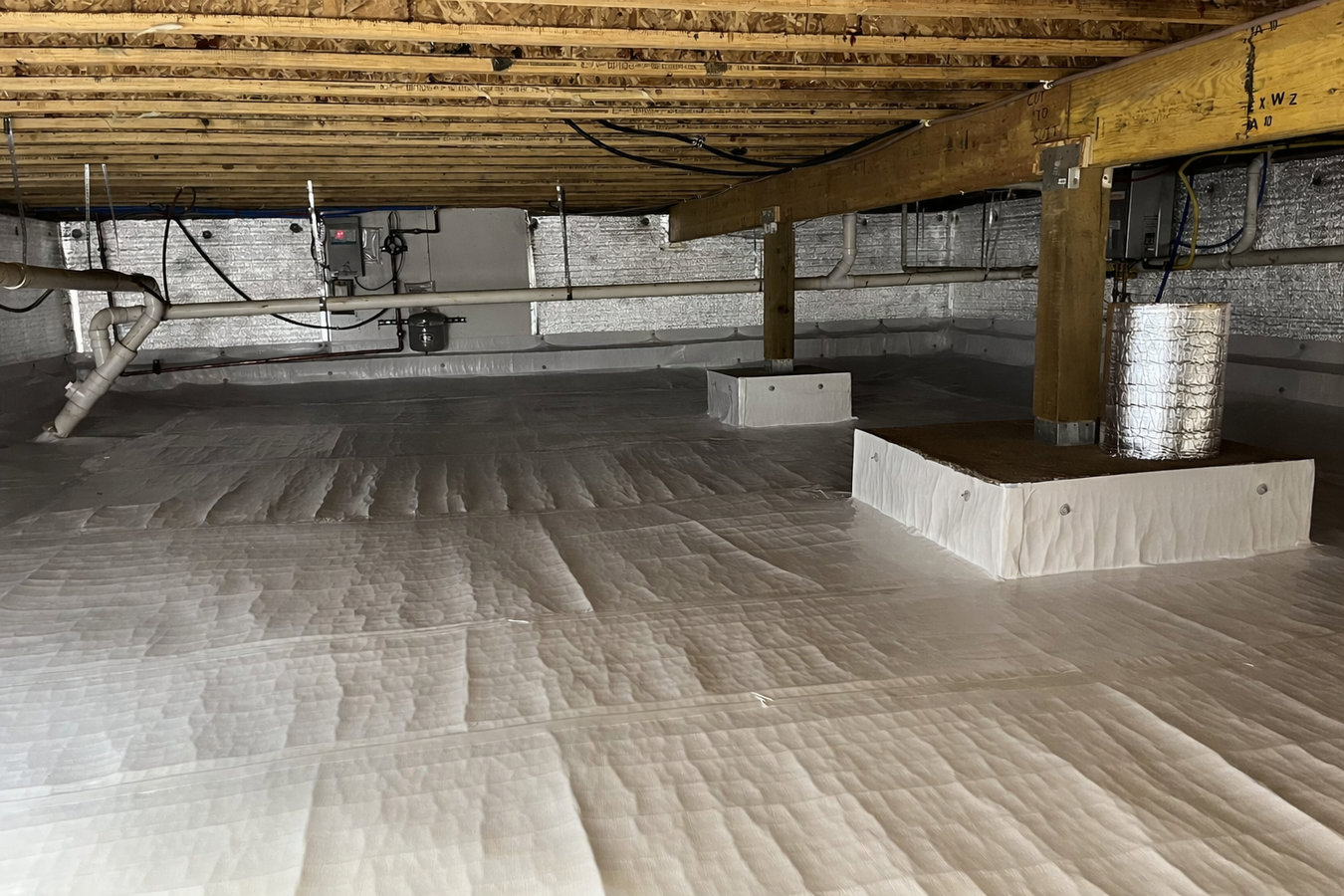
Ground moisture is quietly rising into your floors and framing every time it rains or the snow melts. A properly installed vapor barrier stops that - for good.
Ground moisture is quietly rising into your floors and framing every time it rains or the snow melts. A properly installed vapor barrier stops that - for good.
A crawl space vapor barrier in Essex is a heavy-duty plastic sheet installed across the bare ground and up the foundation walls to block moisture from rising into your home. The crew handles everything inside the crawl space - your living areas stay completely undisturbed - and most jobs are finished in one to two days.
Without a barrier, ground moisture moves upward into your floor joists, insulation, and living space - causing damage you often cannot see until it is expensive to fix. In Essex, that cycle happens every single year through wet winters and snowmelt season. Pairing a vapor barrier with crawl space insulation gives your home a fully protected lower envelope that can handle Vermont's climate.
Many Essex homes built before 1990 either have no vapor barrier at all or have an older, thinner sheet that has degraded over the decades. If you have never had the crawl space inspected, there is a real chance moisture has been working its way into your home's structure for years.
If your home develops a damp, earthy smell every year as the snow melts, that is a strong sign moisture is rising from your crawl space. In Essex, late winter and early spring snowmelt saturates the ground and homes without a vapor barrier show this symptom most clearly in March and April. The smell fades in summer but comes back the following year - a little worse each time.
Walk across your first floor on a cold morning. If certain areas feel noticeably colder than others, or if any spots feel slightly springy underfoot, moisture may have been working on your floor joists for some time. In older Essex homes - particularly those built before 1985 - this is one of the most common early warning signs that the crawl space has been unprotected for years.
If you have ever peeked into your crawl space and seen water droplets on pipes, dark staining on the wood, or wet patches on the bare ground, moisture is already active down there. You do not need to be an expert to recognize these signs. If it looks wet or dark, it is worth having a contractor take a look before more damage builds up.
A damp crawl space makes your home harder to heat because moisture in the floor structure pulls warmth away faster. If your heating costs have climbed over the years without a clear explanation, an unprotected crawl space could be a contributing factor. Vermont's long heating season - often October through April in Essex - means this effect adds up over many months each year.
We install heavy-duty polyethylene sheeting - typically 12 to 20 mils thick - across the full crawl space floor and up the foundation walls, with all seams overlapped and taped so there are no gaps for moisture to sneak through. Thicker material holds up better under foot traffic and resists punctures, which matters when a plumber or HVAC tech needs to access the space later. For homes where a standard vapor barrier is not quite enough, we also offer vapor barrier installation as part of a broader moisture management project that can include wall insulation and controlled ventilation.
Before any barrier goes down, we clear debris, check for signs of standing water or mold, and confirm the crawl space is ready. A vapor barrier installed over an active moisture problem will trap that moisture rather than block it - so the assessment step is not optional. We also help homeowners understand whether an Efficiency Vermont rebate applies to their project, which can meaningfully reduce out-of-pocket costs.
Best for homes with a dirt or concrete crawl space floor that needs ground moisture blocked - a reliable, cost-effective solution for most Essex homes.
Suits homes with higher moisture pressure - thicker material runs up the foundation walls and is anchored in place for long-term durability through freeze-thaw cycles.
For crawl spaces that have accumulated old material, debris, or deteriorated insulation - we clear the space before laying the new barrier.
For homeowners who are not sure what they have - we assess the crawl space, document what we find, and recommend the right next step before any work begins.
Essex sits in Chittenden County, where average annual precipitation runs around 36 inches and winters bring significant snowmelt that saturates the soil for months. The soils in and around Essex include significant clay content, which drains slowly and holds water close to the surface for extended periods after rain or snowmelt. That means the ground beneath your crawl space stays damp longer than it would in areas with sandier soils - putting steady upward moisture pressure on any unprotected floor. Homeowners on lower-lying lots or near seasonal drainage areas are especially likely to see the effects. A large share of Essex homes were built between the 1950s and 1980s, before vapor barriers became standard practice, which means many crawl spaces in this area have never been properly protected.
Vermont's energy efficiency programs add a genuine local advantage. Efficiency Vermont, the state's energy efficiency utility, offers rebates and financing for weatherization work that often includes crawl space sealing - so Essex homeowners may be able to reduce their out-of-pocket cost by checking before they hire. We work throughout the area, including Williston and Colchester, where the same clay-heavy soils and older housing stock create identical crawl space moisture challenges. Late fall - before the ground freezes - is the ideal time to schedule installation, though we work year-round.
Tell us what you have noticed - the smell, the cold floors, or a crawl space that has never been inspected. You do not need to know anything technical. We reply within one business day and will ask a few basic questions to get a sense of the scope before visiting.
We visit your home, enter the crawl space, and check the condition of the ground and any existing material, signs of moisture or mold, and how accessible the space is. This visit typically takes 30 to 60 minutes. You get a written estimate before any work is scheduled - no pressure, no obligation.
The crew arrives, confirms the plan with you, and works entirely inside the crawl space. They clear any debris, lay the sheeting across the full floor, overlap and tape every seam, and secure the edges up the foundation walls. Most jobs take four to eight hours. Your living areas are not disturbed.
Before the crew leaves, we walk you through what was done - showing photos taken inside the crawl space or walking you to the access point so you can see the finished work yourself. We explain what to watch for going forward and answer any questions. Ask about our warranty on materials and labor before we go.
Free estimate, written quote, no pressure. We reply within one business day.
(802) 876-8645The clay-heavy soils common in Essex and surrounding Chittenden County hold moisture close to the surface longer than sandier soils found in other regions. That affects how a vapor barrier needs to be installed and anchored to hold up through Vermont's repeated freeze-thaw cycles. Knowing the local ground conditions means we choose material thickness and installation methods that are appropriate for this specific area - not a one-size-fits-all approach.
Because a crawl space is not a space most homeowners see regularly, we document the work with photos taken before and after installation. You will know exactly what was there when we arrived and what it looks like when we leave. That documentation is also useful if you ever sell the home, file an insurance claim, or simply want to confirm the work holds up over time.
We are familiar with Efficiency Vermont's rebate and financing programs and can help you understand whether your crawl space project qualifies before you commit. Accessing those programs is not complicated, but it helps to work with a contractor who already knows the process rather than figuring it out yourself after the job is done.
We do not lay a vapor barrier over an active moisture problem. If the initial assessment finds standing water, signs of mold, or damaged insulation that needs to come out first, we tell you exactly what needs to happen and in what order. Installing over an unresolved problem traps moisture rather than blocking it - a mistake that costs far more to fix later than addressing it upfront.
Every job we do in the Essex area is built on a straightforward premise: do the work right the first time, document it clearly, and make sure you understand exactly what was done and why. Crawl space moisture is a solvable problem - and solving it properly now, whether that means a vapor barrier, crawl space insulation, or both, is far less expensive than addressing the structural damage it causes if left alone.
Broader moisture protection for basements and walls - pairs with a crawl space barrier to seal your home's full lower envelope.
Learn MoreAdd thermal protection on top of your vapor barrier to keep floors warmer and heating costs lower through Vermont winters.
Learn MoreEssex winters move fast - get your barrier in place before the ground freezes and snowmelt season begins. Call today or request a free written estimate.