
Loading...
Serving Essex, VT and surrounding areas. (802) 876-8645
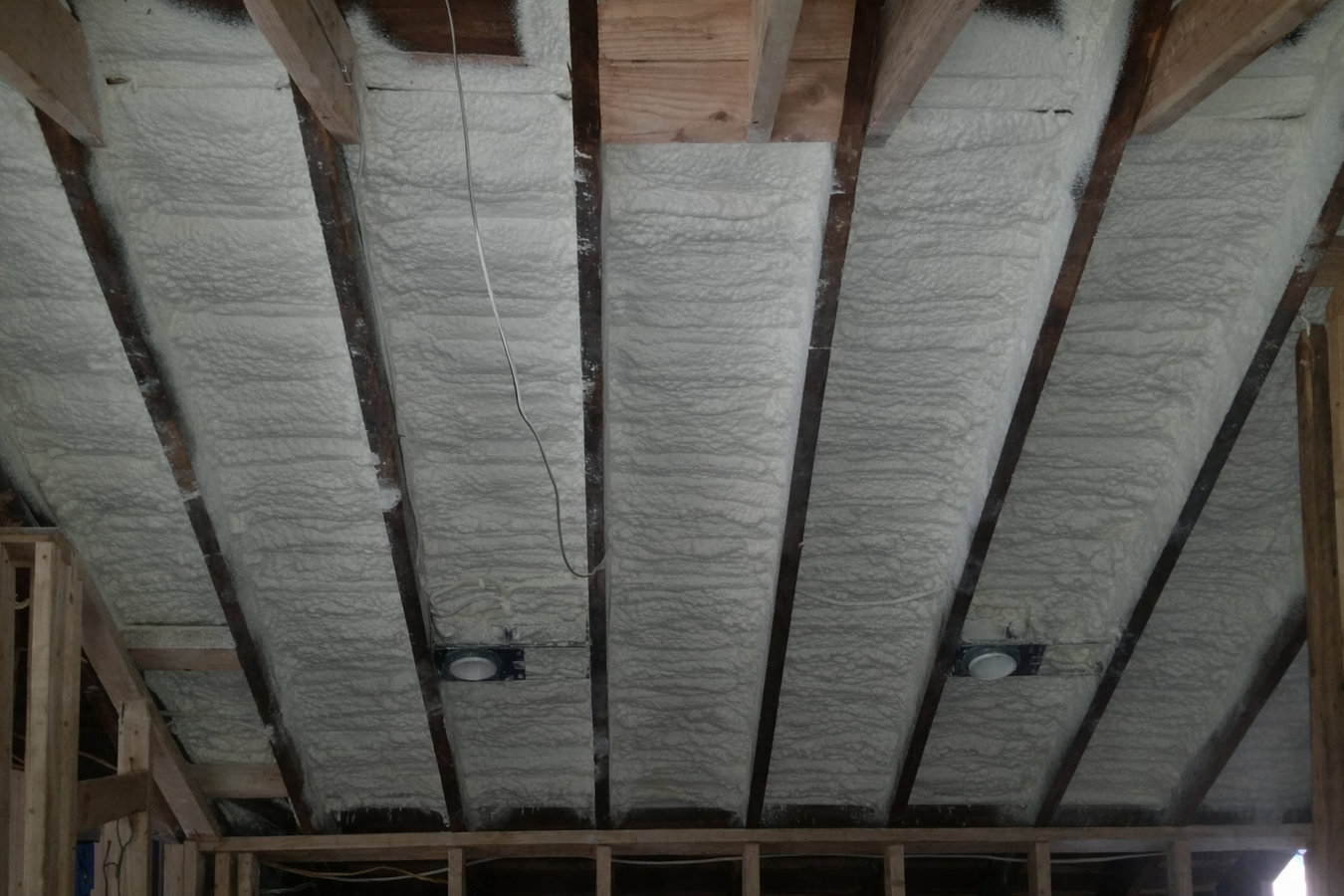
Closed-cell foam stops air leaks and insulates at the same time - making it the most effective upgrade for rim joists, crawl spaces, and attics in Vermont's extreme cold.
Closed-cell foam stops air leaks and insulates at the same time - making it the most effective upgrade for rim joists, crawl spaces, and attics in Vermont's extreme cold.
Closed-cell foam insulation in Essex is sprayed onto surfaces as a liquid that expands into a firm, dense layer - sealing air leaks and delivering high insulating performance in the same application. Most residential jobs are completed in one day, and the foam is fully hardened within a few hours of application.
What makes closed-cell foam different from fiberglass batts or blown-in materials is that it does two jobs at once. It slows heat transfer and stops air movement - so the drafts that make rooms feel cold even when the heat is running get cut off at the source. For older Essex homes with lots of small gaps, that combination makes a more noticeable difference than insulation alone. It also resists moisture, which matters in a climate where foundations face freeze-thaw pressure through most of the winter and into spring. Spray foam insulation is the broader category - closed-cell is the denser, higher-performance type suited to the tightest and most demanding applications in Vermont homes.
Essex has a significant share of homes built before the early 1990s, when insulation requirements were far below today's standards. If your home is in that range and you have never had an insulation upgrade, there is a good chance the rim joists, crawl space, or attic are significantly underperforming.
Cold air pooling near baseboards, drafts along exterior walls, or rooms that never warm up evenly are classic signs of air leaking in from outside. In older Essex homes, the most common sources are the rim joists and gaps around pipes or wires passing through exterior walls. These are exactly the spots where closed-cell foam makes the biggest difference, because it seals gaps while it insulates.
If your fuel or electric bills jump sharply each fall and stay high through March - without any change in your habits - your home is losing heat faster than it should. In Essex's climate, even a modest gap in insulation coverage can translate into hundreds of extra dollars over a Vermont winter. This is one of the most overlooked signs that your home's envelope needs attention.
Ice dams - the ridges of ice that build up along the edge of your roof - form when heat escapes through your attic and melts snow, which then refreezes at the cold eaves. They are common in Essex and can cause serious water damage inside your home. Improving attic air sealing and insulation is one of the most effective ways to prevent them from forming in the first place.
When warm indoor air meets a cold, uninsulated foundation wall, moisture condenses. In Vermont winters, that moisture can actually freeze. If you see frost, ice, or persistent dampness on your basement walls or floor joists during cold months, your foundation area is not properly sealed. Left unaddressed, this leads to mold and wood rot - problems that cost far more to fix than insulation.
Closed-cell foam works in almost any application, but it delivers the most value where space is tight and performance demands are highest. The rim joist - the framing that sits on top of your foundation wall - is often the single biggest air leak in a Vermont home, and foam applied there seals and insulates in one pass. Crawl spaces and basement walls benefit from its moisture resistance, since freeze-thaw cycles drive water into foundations throughout the Vermont winter and spring. For attics, foam applied to air leak points around plumbing, light fixtures, and the hatch stops the heat loss that causes ice dams. Open-cell foam insulation is a lower-cost alternative for interior walls and ceilings where moisture resistance is less critical - your contractor can walk you through which product is right for each area of your home.
Every project starts with a walk-through of the areas you want insulated. We check what is already in place, measure the space, and look for moisture or structural issues before any foam goes in. After the job, we walk you through the finished work and help with any Efficiency Vermont rebate paperwork. The foam itself does not need to be replaced - when properly installed, it lasts the life of the building.
The most common air leak in Vermont basements - foam seals every gap and insulates in a single application, with no curing wait before the space is usable.
Dense foam resists the moisture Vermont's freeze-thaw cycles push into foundations, protecting the structure while keeping the lower level warmer.
Targeted foam at air leak points in the attic cuts the heat loss that causes ice dams and keeps your upper envelope tight through Vermont winters.
Best suited to renovation projects where walls are open - foam fills cavities completely and seals the envelope before the wall is closed back up.
Essex sits in Chittenden County, where average January lows regularly drop into the single digits. In that kind of sustained cold, even small gaps in your home's envelope let in a surprising amount of frigid air. Closed-cell foam's ability to seal and insulate at the same time makes it especially well-suited to Vermont's climate - you are not just slowing heat loss, you are stopping the drafts that make rooms feel cold even when the heat is running. Vermont's freeze-thaw cycling also drives moisture into foundation walls, rim joists, and crawl spaces in ways that are not obvious until damage has already started. Foam applied to those areas creates a barrier that resists that moisture intrusion through every cycle of the season.
A significant portion of the housing stock in and around Essex dates from the 1950s through the 1980s, when insulation requirements were far less demanding than they are today. Many of these homes have under-insulated rim joists, uninsulated crawl spaces, and attics that do not meet current energy standards. We work throughout the area, including Williston and Burlington, where we see the same older housing stock and the same demand for closed-cell foam in tight, high-performance applications. The Spray Polyurethane Foam Alliance maintains certification standards for foam installers, and working with a certified contractor matters for both safety and quality. Efficiency Vermont also offers rebates for qualifying foam insulation work - a good local contractor will know how to structure the project so it qualifies.
Call or submit a request online and we will get back to you within one business day to schedule a free walk-through. This initial visit is free and comes with no obligation - just a look at what your home needs.
A contractor checks the areas you want insulated - rim joists, crawl space, attic, or a combination. We look for existing insulation, measure the space, and flag any moisture or structural issues before making recommendations. You get a written estimate that breaks out scope and cost clearly.
Before installation day, clear the work areas and arrange to leave the house - along with pets - for at least 24 hours after the foam is applied. We tell you exactly what to move and give you a specific re-entry time so you can plan ahead without guessing.
Most residential jobs are done in a day. The crew masks off surfaces, applies the foam in layers, and cleans up before leaving. When you return, the foam is fully hardened. We walk you through the finished work, explain what was done, and help with any Efficiency Vermont rebate paperwork.
Free estimate, no pressure. We will assess your rim joists, crawl space, and attic and give you a clear written quote - no obligation required.
(802) 876-8645We focus on the areas that matter most in Vermont winters - rim joists, crawl spaces, and attics. These are the spots where older Essex homes lose the most heat and where closed-cell foam delivers the greatest improvement in comfort and efficiency. We know which areas to prioritize because we see the same problems in Essex homes year after year.
We structure foam insulation work so it qualifies for Efficiency Vermont rebates whenever possible, and we help with the paperwork. We also tell you about the federal energy efficiency tax credit, which applies to qualifying insulation improvements. You should not have to navigate those programs on your own.
We give you a specific re-entry time before work begins - not a vague estimate after the foam is already applied. You will know exactly when you can return home and what to expect when you do. The foam will be fully hardened, the smell minimal, and the work ready to review together.
Vermont has an energy code that applies to insulation work in certain renovation contexts, and the Town of Essex issues building permits for projects that require them. We tell you upfront whether a permit applies to your job and handle the process ourselves - you do not need to track anything down.
Every job ends with a plain-language walkthrough and documentation you can use for rebate claims, tax credits, and future home sales. We work in Essex and throughout Chittenden County - and we stand behind the work we do here.
A lighter-density spray foam suited to interior walls and ceilings where moisture resistance is less critical - a lower-cost complement to closed-cell applications.
Learn MoreThe full range of spray foam options for Essex homes - from targeted rim joist work to whole-home applications covering attic, walls, and foundation.
Learn MoreEvery Vermont winter you wait is another season of heat escaping through your rim joists and crawl space. Call today for a free estimate and lock in your installation date.