
Loading...
Serving Essex, VT and surrounding areas. (802) 876-8645
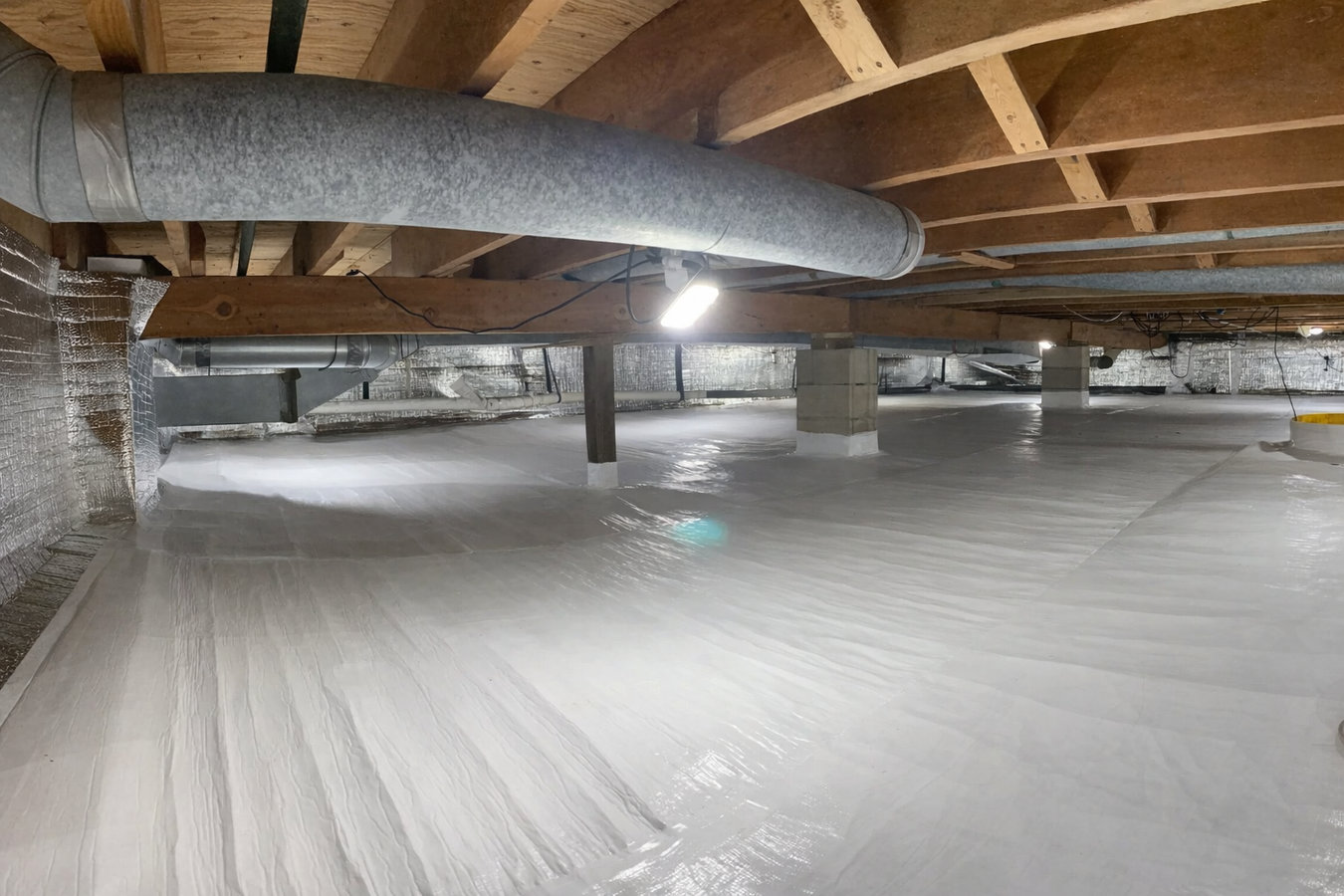
Cold floors, climbing heating bills, and frozen pipe risk in Vermont winters often trace straight back to an uninsulated crawl space. We fix that properly - so the problem does not come back.
Crawl space insulation in Essex, VT acts as a thermal barrier between the cold ground and your living floors, reducing heat loss and protecting pipes from freezing - most installations are completed in a single day for an average-sized home.
If you walk across your kitchen floor in January socks and feel the cold coming up through the floor, your crawl space is not doing its job. Crawl space insulation in Essex addresses that problem directly - not by masking it, but by stopping heat from escaping through the floor in the first place. For older homes in the area with original fiberglass batts that have sagged or absorbed moisture over decades, proper insulation makes an immediate, noticeable difference.
We also address the moisture side of the equation. Vermont's freeze-thaw cycle pushes ground moisture upward, and a crawl space without a vapor barrier can become damp enough to damage both insulation and wood framing quietly over time. Before recommending any insulation approach, we check for moisture so the solution actually holds. If your crawl space also needs a crawl space vapor barrier, we can handle that as part of the same project.
If you walk across your kitchen or living room floor in winter socks and the surface feels noticeably cold, heat is escaping through the floor into the crawl space below. This is one of the most common complaints from Essex homeowners in older homes, and it is a direct sign that the crawl space is not insulated well. It is not just uncomfortable - it means your furnace or boiler is working harder than it should.
Vermont heating costs are already high compared to most of the country. If your bills have been climbing without an obvious reason, the crawl space is worth investigating. Heat escapes through floors and rim joists - the framing where your floor meets the foundation wall. An energy audit or a simple visual inspection of the crawl space can confirm whether insulation is the culprit.
If you shine a flashlight into your crawl space and see fiberglass batts hanging down, gaps in coverage, or daylight through the rim joist area, the insulation has failed. Batts that have sagged or fallen have lost most of their effectiveness. This is especially common in Essex homes from the 1960s through 1980s where original insulation was never updated.
If a plumber told you a pipe nearly froze, or if you lost water pressure during a cold snap, your crawl space is not adequately protected from Vermont's winters. Pipes that run through an uninsulated crawl space are vulnerable any time temperatures drop sharply, which happens regularly in Essex from December through February. Insulating the crawl space is one of the most reliable ways to protect those pipes.
We offer two main approaches to crawl space insulation, and the right one depends on what your specific crawl space looks like. Floor joist insulation - installing insulation between the wooden beams above the crawl space - is the traditional method and works well in many homes. Crawl space encapsulation seals the walls and ground with a vapor barrier and insulates the walls instead, turning the space into a semi-conditioned environment. For homes in Essex where ground moisture is a recurring problem, encapsulation is often the more durable solution.
We also handle rim joist insulation - a commonly overlooked area where the floor framing meets the foundation wall and a significant amount of heat can escape. For homes that need more than insulation alone, we can pair crawl space work with a wall insulation project to address heat loss throughout the building envelope. Every job starts with a moisture check so we are never insulating over a problem that will undo the work.
Suited for homes with a dry, vented crawl space where the goal is to add a thermal barrier between the floor and the cold ground below.
Best for homes with moisture concerns or an unvented crawl space - seals the entire space to stop ground moisture before it can damage insulation or framing.
Addresses a common heat loss point where the floor frame meets the foundation - often paired with floor joist or encapsulation work for the best result.
For crawl spaces with standing water, staining, or mold - we assess and address moisture before any insulation goes in so the work holds up over time.
Essex, VT sits in USDA Hardiness Zone 5b and sees average winter lows well below zero. Vermont homes use more energy per household for heating than the national average, and an uninsulated or under-insulated crawl space is a direct contributor to that cost. The town has a significant share of homes built between the 1950s and 1980s - many with vented crawl spaces and original fiberglass batts that were installed to a standard well below what is recommended today. If your home is in that range and the crawl space has never been properly evaluated, there is a real chance the insulation has settled, sagged, or absorbed enough moisture to have stopped working. Vermont's Department of Energy recommends specific insulation levels for this climate zone that most older homes do not meet.
The freeze-thaw cycle in late winter and early spring pushes ground moisture upward from the soil, and Essex's snowmelt season adds to that moisture load. Crawl spaces without a proper vapor barrier can become consistently damp environments - not enough to flood, but enough to slowly degrade insulation and wood framing. Homeowners in Hinesburg and Shelburne face the same ground moisture challenges, and we serve both areas. Addressing moisture and insulation together - rather than insulating over a damp space - is what makes the difference between a fix that holds and one that does not.
Call or submit a request online and we respond within one business day. We will ask a few basic questions about your home - its age, any moisture or cold floor issues you have noticed, and whether you know what is currently in the crawl space. Fall tends to be our busiest season, so earlier scheduling gives you more flexibility.
We go into the crawl space to check its size, the condition of any existing insulation, and whether there is moisture or standing water. This inspection takes 30 to 60 minutes and is the basis for your written estimate. We will walk you through what we find before recommending anything.
You receive a written estimate that outlines exactly what work will be done, what materials will be used, and what the total cost will be. If moisture remediation or a vapor barrier is needed before insulation can go in, that is listed separately so you understand what you are paying for.
Most crawl space jobs are completed in four to eight hours. We install the insulation - and the vapor barrier if it is part of the scope - and do a final walkthrough with you before we leave. We can also provide documentation for any Efficiency Vermont rebate you may be eligible for.
We reply within one business day. No pressure, no obligation - just an honest look at your crawl space and a clear written quote.
(802) 876-8645We never insulate over a damp crawl space. Before any material goes in, we check for standing water, staining on framing, and signs of mold or condensation. This step is what separates work that holds up through Vermont's wet springs from work that has to be redone two seasons later.
A lot of Essex homes were built in an era when crawl space insulation was minimal or non-existent by today's standards. We have worked in enough of these homes to know what to expect - original batts that have fallen, rim joists with no coverage at all, and vented crawl spaces that need a different approach than newer construction.
Crawl space insulation can qualify for rebates through Efficiency Vermont, but only if the work meets specific standards and is properly documented. We know what those requirements are and help you capture that rebate - so your net project cost comes down without extra paperwork hassle on your end.
Vermont has residential building energy standards administered by the Department of Public Service that affect permitted insulation work. We stay current on those standards so your project is done to the level that protects your home's value and satisfies inspection when a permit is required.
Every crawl space insulation job we do in Essex starts with an honest assessment and ends with a clear walkthrough. That transparency - combined with our knowledge of Vermont's specific climate challenges and rebate programs - is why homeowners in this area keep calling us back.
Extend your home's thermal envelope by insulating exterior and interior walls alongside your crawl space project.
Learn MoreStop ground moisture at the source with a properly installed vapor barrier - the essential first step for any crawl space insulation job.
Learn MoreCold floors and frozen pipe risk do not wait for the right time - call us today or submit a free estimate request and we will get back to you within one business day.